
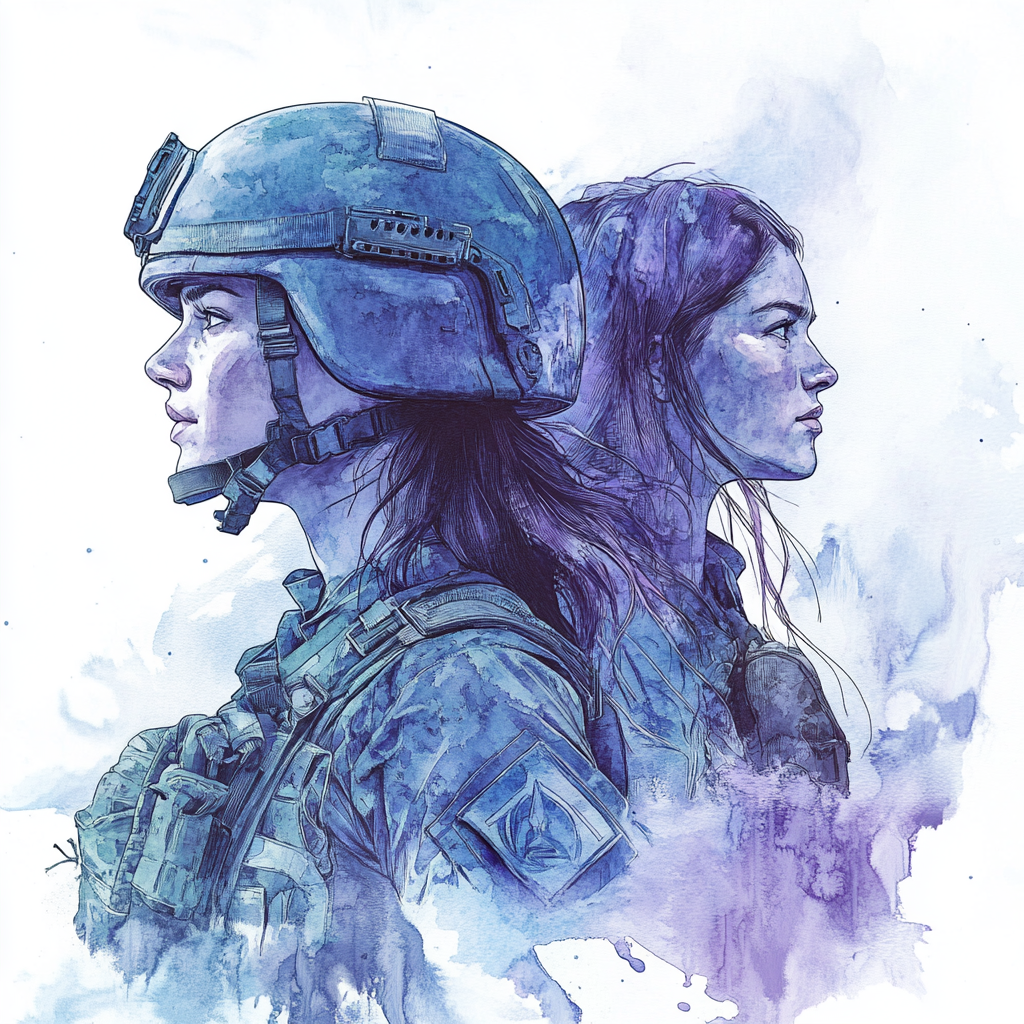
Resilience and Reintegration
Life after military service represents one of the most profound transitions any soldier can undergo, and for women in Israel, that transition carries unique emotional, social, and spiritual dimensions. Serving in the Israel Defense Forces (IDF) is more than an obligation; it is a rite of passage, a defining chapter in nearly every Israeli’s life. For women, however, the journey does not end when the uniform comes off. It continues into civilian life, where they must translate military discipline into professional success, balance family and national duty, and reconcile the intense experiences of service with the demands of everyday living. The resilience required to navigate this reintegration reveals both the enduring strength of Israeli women and the silent challenges they often face long after their military service concludes.
The IDF is unique among modern armies in its conscription of women, a policy rooted in the belief that national defense is a shared responsibility. This experience shapes not only the young women who serve but also the society they return to. During their service, women soldiers learn to operate in hierarchical, high-pressure environments where discipline, precision, and emotional control are paramount. They develop a deep sense of purpose and camaraderie that becomes central to their identity. Yet, once they return to civilian life, the structure that defined their days disappears. The sense of belonging to something larger than themselves — the unity of mission and the constant presence of peers — can be abruptly replaced by a quieter, more fragmented world. This loss of collective identity often triggers what psychologists describe as “post-service disorientation,” a subtle but powerful emotional shift.
For many women, this period of reintegration is further complicated by gender expectations and life-stage transitions. Israeli women typically complete their service around the age of 20 or 21 — precisely when they begin shaping their educational and career paths or considering marriage and motherhood. While male veterans often enter civilian life with similar challenges, the social pressures on women to build families and careers simultaneously create a dual burden. The values of resilience and endurance instilled in the army can serve as assets in facing these pressures, but they can also obscure the emotional cost. Many women internalize the expectation to “keep going,” drawing on the stoicism learned in uniform even when they struggle internally.
The psychological effects of military life can be both empowering and taxing. On one hand, women emerge from service with heightened self-confidence, leadership skills, and problem-solving abilities. They have faced adversity — whether in combat units, intelligence divisions, or support roles — and learned to thrive under pressure. These traits often translate into success in the civilian workforce, where former soldiers are valued for their discipline and initiative. On the other hand, the intense nature of military environments can leave lasting psychological marks. Exposure to violence, separation from family, and the moral complexities of service can lead to feelings of isolation or anxiety once civilian life resumes. Studies on post-traumatic stress among female soldiers show that while rates are generally lower than among their male counterparts, women often underreport symptoms due to social stigma and internalized resilience narratives.
Motherhood introduces another dimension to this reintegration process. Many former soldiers carry the emotional weight of their service into their roles as mothers. The military’s emphasis on protection, vigilance, and responsibility can intensify maternal instincts, but it can also create anxiety about their children’s future conscription or safety. For some women, the transition from soldier to mother represents a symbolic continuation of service — raising the next generation to defend the same ideals. Others struggle with guilt or ambivalence, especially when balancing demanding careers with family life. The ability to nurture and protect, once expressed through national duty, must now adapt to the private sphere of home and child-rearing.
In recent years, Israeli society has begun to recognize the need for more structured post-service support for women veterans. Counseling programs, mentorship networks, and initiatives to help female soldiers transition into higher education and professional fields have grown in visibility. Organizations such as “Achotenu” and “Nashim LeMa’an Nashim” are providing safe spaces for women to discuss their experiences and find meaning beyond the military framework. However, significant gaps remain. Many programs still focus on combat veterans, leaving women who served in intelligence or logistical units underrepresented. Moreover, the cultural expectation that women “bounce back” quickly from military life can discourage open discussion about mental health or identity struggles.
Despite these challenges, resilience remains a defining characteristic of Israeli women soldiers. Their ability to adapt, to transform experiences of discipline and duty into personal growth, underscores the strength of their character. Many channel their military training into civic leadership, education, and community building. Others enter politics or social work, advocating for policies that support women in uniform and beyond. The military may have taught them to operate under command, but post-service life often teaches them to lead — to find their own voice and purpose in a civilian world that still bears the imprint of militarization.
Ultimately, the reintegration of Israeli women soldiers is not merely a personal journey but a societal reflection. Their resilience reveals the complexity of a nation where defense is both a collective obligation and a deeply individual experience. As these women navigate careers, motherhood, and ongoing national service — sometimes as reservists, sometimes as mentors — they embody the enduring spirit of Israel itself: strong, adaptive, and unyielding in the face of challenge. Their stories remind us that service does not end when the uniform is returned. It evolves — into families nurtured, communities strengthened, and a nation continually renewed by the quiet resilience of its women.
